
Hydrogen Derivatives

Data availability as the key to the municipal heat transition
The Dual Role of Ammonia
Ammonia is produced from hydrogen and nitrogen using the established Haber-Bosch process and can transport hydrogen in chemically bound form over long distances. Currently, ammonia is primarily used as a feedstock for fertilisers, but in future it could also be increasingly used for energy purposes: either as a transport medium for hydrogen to facilitate required imports, or directly as a fuel. Particularly in maritime shipping, ammonia is regarded as a promising option for decarbonisation, as it can be utilised directly as a fuel without requiring reconversion.
Ammonia’s Greatest Strength: An Established Market Already Exists!
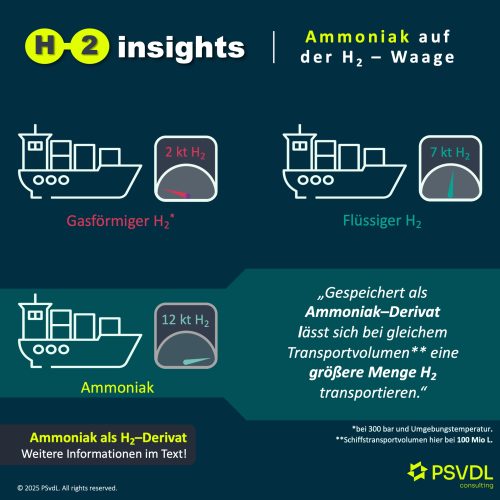
Ammonia can already be produced, shipped and stored worldwide today. Its proven infrastructure and favourable molecular properties, such as a high volumetric energy density, provide ammonia with distinct cost advantages during transport. Other derivatives, such as LOHC or methanol, are considerably more expensive to supply. In addition to its transportability, it is also exceptionally easy to store. However, disadvantages include high costs and energy losses during reconversion, among other factors.
Opportunities and Challenges